

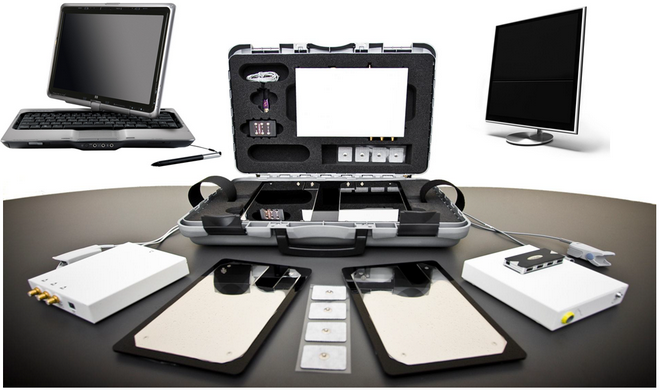

Wellness-Medical-Screening
2 500 SEK
Kroppsscanning med modern evidensbaserad teknologi. Vi använder den senaste uppgraderade versionen av Ess-Teck-scannern- Wellness-Medical-Screening.
OBS! Erbjuds på plats på Odenplans Naturhälsa. Bokning av tid via Boka Direkt.
Avgift 2500 kr för 90 min.
- Säkra och flexibla betalningar med Payson
- Kvalitetssäkrad telefonsupport
Beskrivning
Denna effektiva och ej invasiva Wellness-Medical-Screening
ger på några minuter en fysiologisk panel, bestående av 40-60 olika biomarkörer, vilka fungerar som mätbara indikatorer på ett biologiskt tillstånd. Screeningen hjälper dig förstå din hälsostatus och därmed vilka optimala livsstilsråd, kost- och träningsprogram som kan ge bäst effekt, samt rekommendationer om lämpliga kosttillskott.
Mätresultaten från scanningen delas in i fyra grupper:
- Lifestyle score
- Homeostasis score
- Macrovascular score
- Microvascular score
Biomarkörer som bl.a. ingår:
Homeostasis score
Under homeostasis score finner ni nedanstående biomarkörer:
• Insulin Resistans (metabolisk homeostasis) – Diabetes är en sjukdom som orsakas av en dysfunktion i kroppens förmåga att reglera blodsockret via insulin.
• Endothelial homeostasis – Hur kroppen kan respondera och använda cirkulationssystemet som ett verktyg för att skapa vasodilatation eller en vasokonstriktion.
• Autonomic homeostasis – Kroppen använder det autonoma nervsystemet för att skapa en homeostatisk balans. Hög stress under lång tid kan slå ut kroppens förmåga att behålla en god balans/homeostas.
• Inflammation – Om kroppen har en god homeostas återfinns ingen kronisk inflammation.
Kliniska studier
Measurement and Interpretation of the Ankle-Brachial Index
Photoplethysmography and its application in clinical physiological measurement
Diabetes Autonomic Neuropathy
Diabetic Neuropathy: Diagnostic Methods
Determination of age-related increases in large artery stiffness by digital pulse contour analysis
Role of Endothelial Dysfunction in Atherosclerosis
Impact of Reduced Heart Rate Variability on Risk for Cardiac Events
Diabetes, Glucose, Insulin, and Heart Rate Variability
Diabetic Neuropathies: The Nerve Damage of Diabetes
Diabetes, Glucose, Insulin, and Heart Rate Variability
Independent Determinants of Second Derivative of the Finger Photoplethysmogram among Various Cardiovascular Risk Factors in Middle-Aged Men
Assessment of Vascular Aging and Atherosclerosis in Hypertensive Subjects
Diabetes: Sweat Response and Heart Rate Variability During Electrical Stimulation in Controls and People With Diabetes
Diagnosis and Treatment of Pain in Small Fiber Neuropathy
1. American Diabetes Association and American Academy of Neurology. Consensus statement: report and recommendations of the San Antonio Conference on Diabetic Neuropathy. Diabetes Care 1988; 11: 592–597.
2. Tesfaye S, Boulton AJ, Dyck PJ, et al.Diabetic neuropathies: update on definitions,diagnostic criteria, estimation of severity, and treatments. Diabetes Care 2010; 33: 2285–2293.
3. Ziegler D, Gries FA, Muhlen H, et al.Prevalence and clinical correlates of cardiovascularautonomic and peripheral diabetic neuropathy in patients attending diabetes centers. Diabetes Metab 1993; 19: 143–151.
4. Valensi P, Paries J, Attali JR; French Group for Research and Study of Diabetic Neuropathy. Cardiac autonomic neuropathy in diabetic patients: influence of diabetes duration, obesity, and microangiopathic complications– the French multicenter study. Metabolism 2003; 52: 815–820.
5. Low PA, Benrud-Larson LM, Sletten DM, et al. Autonomic symptoms and diabetic neuropathy: a population-based study. Diabetes Care 2004; 27: 2942–2947.
6. Pop-Busui R, Low PA, Waberski BH,et al. Effects of prior intensive insulintherapy on cardiac autonomic nervous system function in type 1 diabetes mellitus: the Diabetes Control and Complications.Trial/Epidemiology of Diabetes. Interventions and Complications study (DCCT/EDIC). Circulation 2009; 119: 2886–2893.
7. Ewing DJ, Martyn CN, Young RJ,Clarke BF. The value of cardiovascular autonomic function tests: 10 years experience in diabetes. Diabetes Care 1985; 8: 491–498.
8. Kempler P, Tesfaye S, Chaturvedi N, et al. Blood pressure response to standing in the diagnosis of autonomic neuropathy: the EURODIAB IDDM Complications Study. Arch Physiol Biochem 2001; 109: 215–222.
9. Maser RE, Mitchell BD, Vinik AI, Freeman R. The association between cardiovascular autonomic neuropathy and mortality in individuals with diabetes: a meta-analysis. Diabetes Care 2003; 26:1895–1901.
10. Wheeler SG, Ahroni JH, Boyko EJ. Prospective study of autonomic neuropathy as a predictor of mortality in patients with diabetes. Diabetes Res Clin Pract 2002; 58: 131–138.
11. Astrup AS, Tarnow L, Rossing P, Hansen BV, Hilsted J, Parving HH. Cardiac autonomic neuropathy predicts cardiovascularmorbidity and mortality in type 1 diabetic patients with diabetic nephropathy. Diabetes Care 2006; 29: 334–339.
12. Wackers FJ, Young LH, Inzucchi SE, et al. Detection of silent myocardial ischemia in asymptomatic diabetic subjects: the DIAD study. Diabetes Care2004; 27: 1954–1961.
13. Valensi P, Sachs RN, Harfouche B, et al. Predictive value of cardiac autonomic neuropathy in diabetic patients with or without silent myocardial ischemia. DiabetesCare 2001; 24: 339–343.
14. Ryden L, Standl E, Bartnik M, et al. Guidelines on diabetes, pre-diabetes, and cardiovascular diseases: executive summary. The Task Force on Diabetes and Cardiovascular Diseases of the European Society of Cardiology (ESC)and of the European Association for the Study of Diabetes (EASD). Eur Heart J.2007; 28: 88–136.
15. Millasseau SC et al. Determination of age-related increases in large artery stiffness by digital pulse contour analysis. Clinical Science (2002) 103, 371±377.
16. Takazawa, K et al. Assessment of Vasoactive Agents and Vascular Aging by the Second Derivative of Photoplethysmogram Waveform. Hypertension: Volume 32(2) August 1998pp 365-370
17. Bagherzadeh et al. Association of cardiac autonomic neuropathy with endothelial dysfunction in type 2 diabetes mellitus patients. Journal of Diabetes & Metabolic Disorders 2013, 12:55
18. Dimitropoulos G, Tahrani AA, Stevens MJ. Cardiac autonomic neuropathy in patients with diabetes mellitus. World J Diabetes 2014 February 15; 5(1): 17-39.
19. Spallone V.et al.. Cardiovascular autonomic neuropathy in diabetes: clinical impact, assessment, diagnosis, and management. Diabetes Metab Res Rev 2011; 27: 639–653.
20. Jae-Seung Yun et al. Cardiovascular Autonomic Dysfunction Predicts Severe Hypoglycemia in Patients With Type 2 Diabetes: A 10-Year Follow-up Study. Diabetes Care Volume 37, January 2014
21. ACCORD study publication. NIH news
22. Ben M.W. Illigens, Christopher H. Gibbons. Sweat testing to evaluate autonomic function Clin Auton. Res. 2009 April; 19(2): 79–87.
23. Aboyans V. et al. Measurement and Interpretation of the Ankle-Brachial Index: A Scientific Statement from the American Heart Association. Circulation, November 2012.
- Hjärta- och cirkulation
- Kväveoxid – Endotel funktion
- Stress – Autonoma nervsystemet
- Kroppssammansättning
- Syremättnad, VO2 max
- Insulin resistans
- Låg-gradig kronisk inflammation
- Hjärnan – (serotonin, dopamin och noradrenalin)
- Matsmältningssystem
- Neuropati (Sudomotor funktion)
- pH balans, oxidativ stress
- Metabolism – Sköldkörtel
- Lever/Njure
Homeostasis score
Under homeostasis score finner ni nedanstående biomarkörer:
• Insulin Resistans (metabolisk homeostasis) – Diabetes är en sjukdom som orsakas av en dysfunktion i kroppens förmåga att reglera blodsockret via insulin.
• Endothelial homeostasis – Hur kroppen kan respondera och använda cirkulationssystemet som ett verktyg för att skapa vasodilatation eller en vasokonstriktion.
• Autonomic homeostasis – Kroppen använder det autonoma nervsystemet för att skapa en homeostatisk balans. Hög stress under lång tid kan slå ut kroppens förmåga att behålla en god balans/homeostas.
• Inflammation – Om kroppen har en god homeostas återfinns ingen kronisk inflammation.
Kliniska studier
Measurement and Interpretation of the Ankle-Brachial Index
Photoplethysmography and its application in clinical physiological measurement
Diabetes Autonomic Neuropathy
Diabetic Neuropathy: Diagnostic Methods
Determination of age-related increases in large artery stiffness by digital pulse contour analysis
Role of Endothelial Dysfunction in Atherosclerosis
Impact of Reduced Heart Rate Variability on Risk for Cardiac Events
Diabetes, Glucose, Insulin, and Heart Rate Variability
Diabetic Neuropathies: The Nerve Damage of Diabetes
Diabetes, Glucose, Insulin, and Heart Rate Variability
Independent Determinants of Second Derivative of the Finger Photoplethysmogram among Various Cardiovascular Risk Factors in Middle-Aged Men
Assessment of Vascular Aging and Atherosclerosis in Hypertensive Subjects
Diabetes: Sweat Response and Heart Rate Variability During Electrical Stimulation in Controls and People With Diabetes
Diagnosis and Treatment of Pain in Small Fiber Neuropathy
1. American Diabetes Association and American Academy of Neurology. Consensus statement: report and recommendations of the San Antonio Conference on Diabetic Neuropathy. Diabetes Care 1988; 11: 592–597.
2. Tesfaye S, Boulton AJ, Dyck PJ, et al.Diabetic neuropathies: update on definitions,diagnostic criteria, estimation of severity, and treatments. Diabetes Care 2010; 33: 2285–2293.
3. Ziegler D, Gries FA, Muhlen H, et al.Prevalence and clinical correlates of cardiovascularautonomic and peripheral diabetic neuropathy in patients attending diabetes centers. Diabetes Metab 1993; 19: 143–151.
4. Valensi P, Paries J, Attali JR; French Group for Research and Study of Diabetic Neuropathy. Cardiac autonomic neuropathy in diabetic patients: influence of diabetes duration, obesity, and microangiopathic complications– the French multicenter study. Metabolism 2003; 52: 815–820.
5. Low PA, Benrud-Larson LM, Sletten DM, et al. Autonomic symptoms and diabetic neuropathy: a population-based study. Diabetes Care 2004; 27: 2942–2947.
6. Pop-Busui R, Low PA, Waberski BH,et al. Effects of prior intensive insulintherapy on cardiac autonomic nervous system function in type 1 diabetes mellitus: the Diabetes Control and Complications.Trial/Epidemiology of Diabetes. Interventions and Complications study (DCCT/EDIC). Circulation 2009; 119: 2886–2893.
7. Ewing DJ, Martyn CN, Young RJ,Clarke BF. The value of cardiovascular autonomic function tests: 10 years experience in diabetes. Diabetes Care 1985; 8: 491–498.
8. Kempler P, Tesfaye S, Chaturvedi N, et al. Blood pressure response to standing in the diagnosis of autonomic neuropathy: the EURODIAB IDDM Complications Study. Arch Physiol Biochem 2001; 109: 215–222.
9. Maser RE, Mitchell BD, Vinik AI, Freeman R. The association between cardiovascular autonomic neuropathy and mortality in individuals with diabetes: a meta-analysis. Diabetes Care 2003; 26:1895–1901.
10. Wheeler SG, Ahroni JH, Boyko EJ. Prospective study of autonomic neuropathy as a predictor of mortality in patients with diabetes. Diabetes Res Clin Pract 2002; 58: 131–138.
11. Astrup AS, Tarnow L, Rossing P, Hansen BV, Hilsted J, Parving HH. Cardiac autonomic neuropathy predicts cardiovascularmorbidity and mortality in type 1 diabetic patients with diabetic nephropathy. Diabetes Care 2006; 29: 334–339.
12. Wackers FJ, Young LH, Inzucchi SE, et al. Detection of silent myocardial ischemia in asymptomatic diabetic subjects: the DIAD study. Diabetes Care2004; 27: 1954–1961.
13. Valensi P, Sachs RN, Harfouche B, et al. Predictive value of cardiac autonomic neuropathy in diabetic patients with or without silent myocardial ischemia. DiabetesCare 2001; 24: 339–343.
14. Ryden L, Standl E, Bartnik M, et al. Guidelines on diabetes, pre-diabetes, and cardiovascular diseases: executive summary. The Task Force on Diabetes and Cardiovascular Diseases of the European Society of Cardiology (ESC)and of the European Association for the Study of Diabetes (EASD). Eur Heart J.2007; 28: 88–136.
15. Millasseau SC et al. Determination of age-related increases in large artery stiffness by digital pulse contour analysis. Clinical Science (2002) 103, 371±377.
16. Takazawa, K et al. Assessment of Vasoactive Agents and Vascular Aging by the Second Derivative of Photoplethysmogram Waveform. Hypertension: Volume 32(2) August 1998pp 365-370
17. Bagherzadeh et al. Association of cardiac autonomic neuropathy with endothelial dysfunction in type 2 diabetes mellitus patients. Journal of Diabetes & Metabolic Disorders 2013, 12:55
18. Dimitropoulos G, Tahrani AA, Stevens MJ. Cardiac autonomic neuropathy in patients with diabetes mellitus. World J Diabetes 2014 February 15; 5(1): 17-39.
19. Spallone V.et al.. Cardiovascular autonomic neuropathy in diabetes: clinical impact, assessment, diagnosis, and management. Diabetes Metab Res Rev 2011; 27: 639–653.
20. Jae-Seung Yun et al. Cardiovascular Autonomic Dysfunction Predicts Severe Hypoglycemia in Patients With Type 2 Diabetes: A 10-Year Follow-up Study. Diabetes Care Volume 37, January 2014
21. ACCORD study publication. NIH news
22. Ben M.W. Illigens, Christopher H. Gibbons. Sweat testing to evaluate autonomic function Clin Auton. Res. 2009 April; 19(2): 79–87.
23. Aboyans V. et al. Measurement and Interpretation of the Ankle-Brachial Index: A Scientific Statement from the American Heart Association. Circulation, November 2012.
Filer och media
 | Här är en videopresentation av en screening |